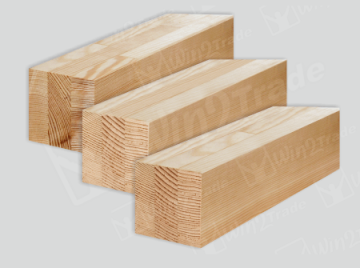
Laminated timber in window joinery.
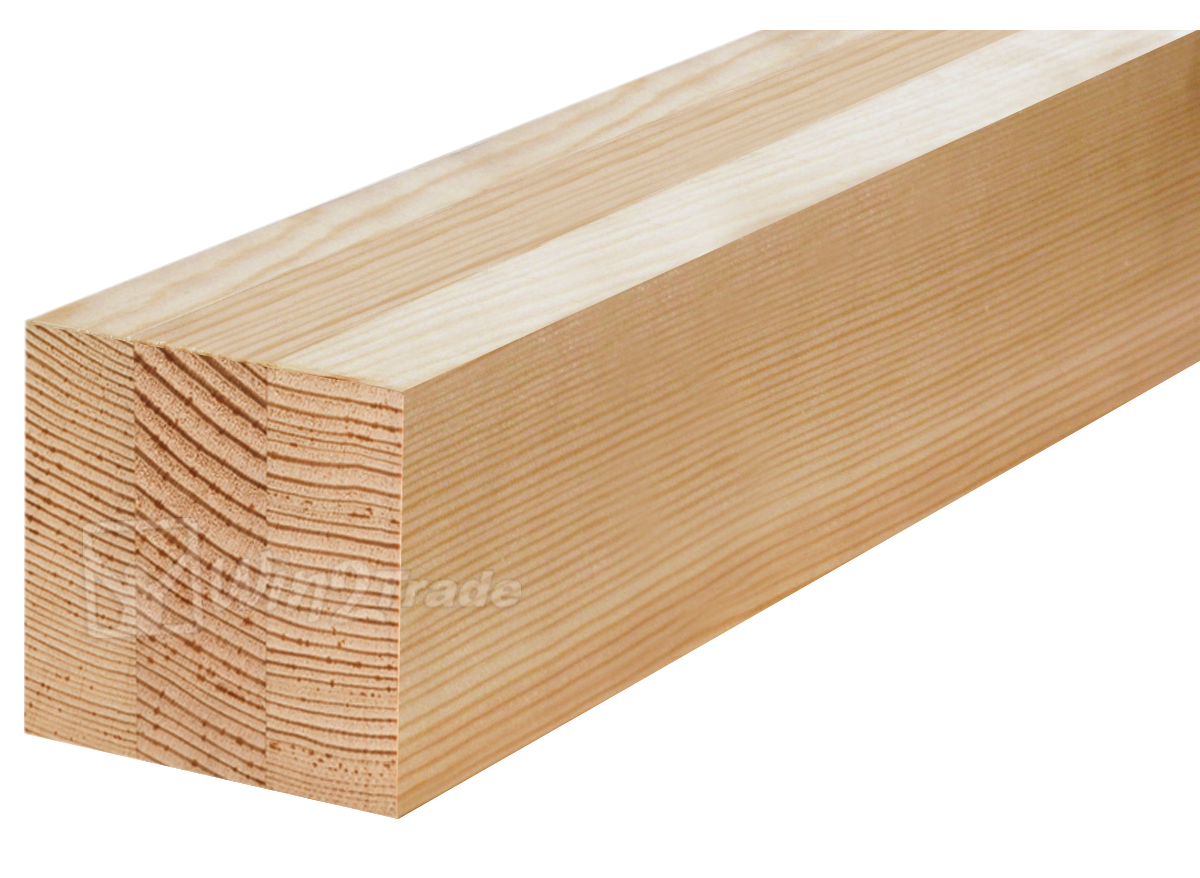
In window joinery with a thickness (installation depth) of 68mm (similarly: 78, 92mm), laminated timber is used, consisting of three layers (lamellas):
– two outer (extreme) layers,
– one middle (inner) layer.
 |
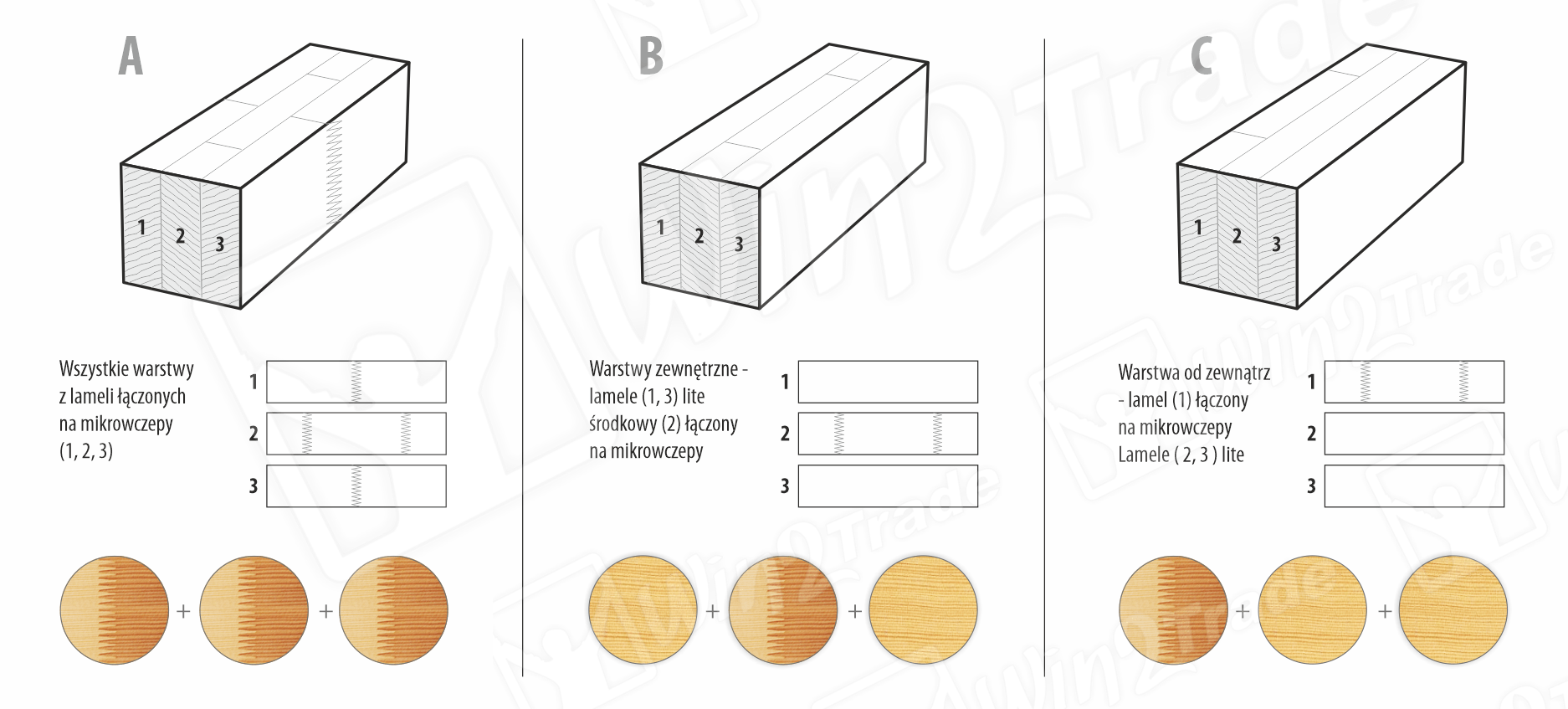
Types of lamellas used in laminated timber.
Each layer (lamella) can be made as:
– solid (continuous board) or
– finger-jointed – by removing defects (e.g., knots) and connecting the elements with finger joints.
You can find more about finger-jointing > here <
Laminated timber options:
A) Fully jointed laminated timber
– all three layers are made of elements joined by finger joints,
– the lamellas are arranged alternately (taking into account the grain direction),
– the joints are offset relative to each other (like “brick-in-a-wall bonding”). This construction ensures a compact structure, high dimensional stability and uniform stress transfer.
B) Laminated timber with solid outer lamellas
– the outer layers (from the interior side and the building exterior side) are made of solid wood,
– the middle layer is joined with finger joints.
C) Laminated timber for wood-aluminum joinery
– outer layer on the interior side – solid,
– middle layer – solid,
– outer layer on the exterior side (the side where the aluminum cladding is installed) is joined using finger joints.
 |
Important:
+ Three-layer laminated timber is a standard in modern window joinery.
+ Various lamellas configurations are possible (solid/finger-jointed).
+ The type of lamellas used does not affect the structural strength.
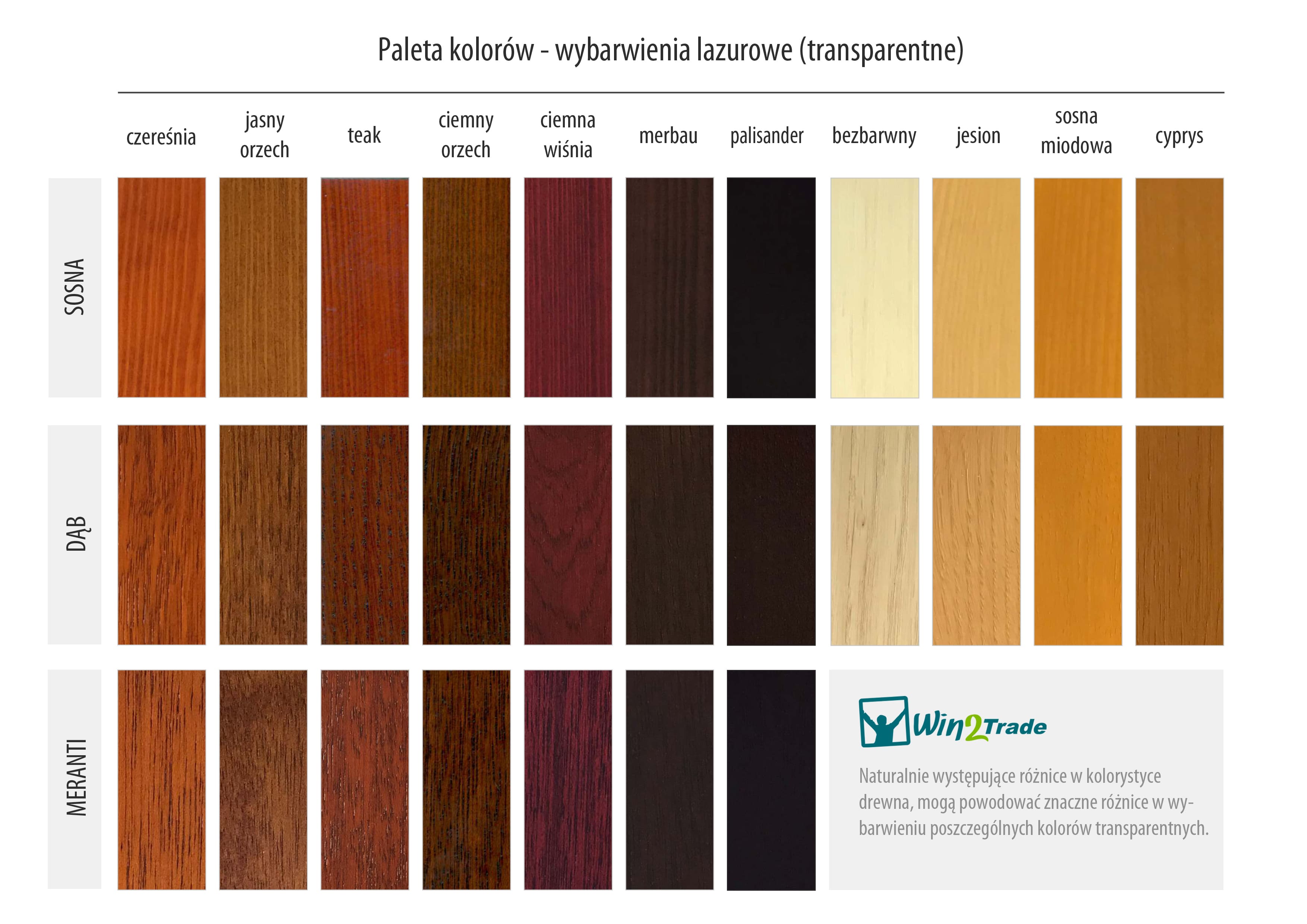
+ The choice of laminated timber (A,B) is crucial only for the visual effect, especially with transparent finishes. For light LAZURES/lacquers in option (A), the joints may be visible. The wood structure and grain arrangement may create the impression of a visually “inhomogeneous” surface.
+ In the case of wood-aluminum joinery, laminated timber (C) is used – the interior side, visible to the user, is solid wood, while the exterior side, invisible (under the aluminum cladding), allows for a jointed lamellas.